Water damage service
Gainesville Rapid Water Damage: water extraction in Gainesville, FL
Gainesville Rapid Water Damage removes standing and absorbed water from Gainesville homes and businesses with truck-mounted and portable extraction. Extraction is the highest-leverage hour of any water loss because water removed mechanically never has to be evaporated: every gallon pulled by machine is a gallon your dehumidifiers do not spend two days chasing out of the air.
Call (352) 450-6122 Same-day response* across Gainesville and Alachua County
It is also the step most often done badly, because surface water disappears quickly and gives a false impression that the job is finished.
Extracting standing water from floors and cavities
Different water sits in different places and each needs a different tool. Surface water comes up fastest, but the water held in carpet pad, under plank flooring and inside wall cavities is what determines whether the material can stay.
Truck-mounted extraction for volume
The highest-capacity option, used where access allows. Volume is what matters when a supply line has been running unattended for hours.
Portable extraction for upstairs and tight access
Second floors, condominium units and the tight interior stairs common in older Gainesville homes, where a hose run to the street is not practical.
Weighted extraction through carpet and pad
Weighted heads pull water out of pad rather than just off the surface, which is often the difference between drying carpet in place and taking it to the landfill.
Extracting water from wall cavities
Water behind baseboard and inside stud bays does not come up through the floor. It is reached through small controlled openings, which are far cheaper to close than a full wall replacement.
Deciding what survives extraction
The extraction result determines the demolition decision. Material that is genuinely saturated and has been for many hours will not be rescued by drying equipment, and pretending otherwise wastes days before the removal happens anyway.
Carpet and pad
Pad is usually removed on anything past a clean-water loss. Carpet itself can often be dried in place if extraction happens quickly.
Hard flooring over slab
Tile over a Gainesville slab is highly survivable. Engineered wood and laminate swell irreversibly at the seams and rarely come back.
Step by step
How extraction runs
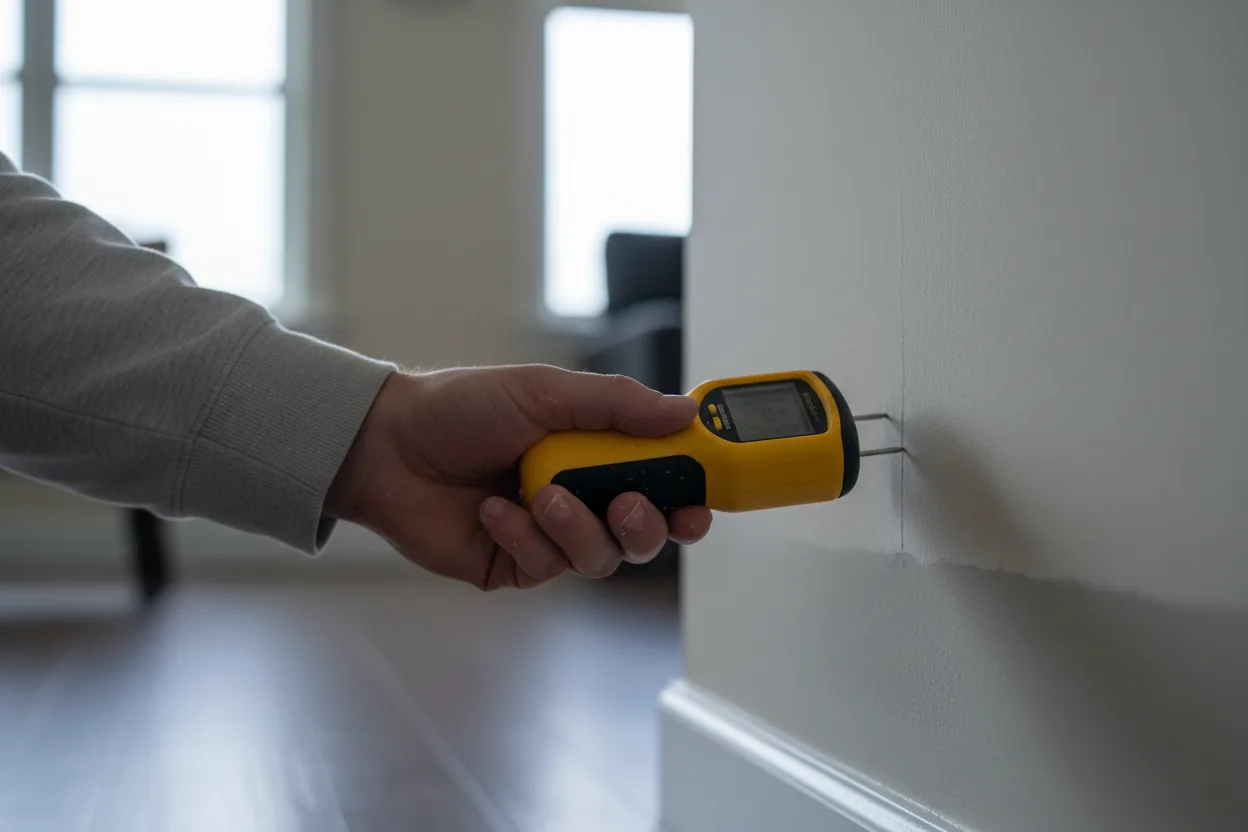
- Map before you pull. Meters mark the wet edge so extraction covers the whole footprint, not just the puddle.
- Standing water first. Open water comes up on the highest-capacity equipment that can reach it.
- Then the absorbed water. Weighted extraction through carpet and pad, and controlled cavity access where water sits behind the wall.
- Re-read the meters. A second reading after extraction shows what is left for the drying equipment to handle.
- Set drying immediately. Air movers go in while material is still cool and wet, which is when evaporation is most effective.
Straight answers on price
What water extraction costs
Extraction is usually priced on area and volume, and it is the cheapest hour of the whole job relative to what it saves. Skipping or shortening it is a false economy that shows up as equipment days later.
| What drives the price | Why it moves the number |
|---|---|
| Volume of standing water | Depth across area determines truck time. A quarter inch across a whole floor is more water than most people estimate. |
| Flooring type | Extracting through carpet and pad takes longer per square foot than an open tile floor, because the water is held rather than pooled. |
| Access | A ground-floor room near a driveway extracts faster than a second-floor bedroom in a house with a narrow stair. |
| Water category | Category three water requires disposal handling and equipment decontamination afterwards, which adds to the line. |
Extraction is mitigation and is almost always covered on a sudden and accidental loss, since it is the step that limits further damage. It is billed on documented area and time, which is why the moisture map from the first visit matters to the claim.
Questions people ask
Questions people ask
Can I just use a shop vacuum?
For a small spill on hard flooring, yes. For anything that reached carpet pad, went under plank flooring or touched drywall, a shop vacuum removes the water you can see and leaves the water that causes the damage. It also cannot pull water from a wall cavity.
How much water is actually in my floor?
More than it looks. Carpet pad holds several times its dry weight in water, and a quarter inch of standing water across a 200 square foot room is roughly 30 gallons. That is why extraction capacity, not mopping, decides the outcome.
Will extraction alone dry my house?
No. Extraction removes bulk water and typically gets you most of the way, but the moisture remaining in framing, subfloor and drywall has to be evaporated out with air movers and dehumidifiers and verified by meter.
How soon does extraction need to happen?
Immediately. Every hour water stays in contact with porous material, more of it wicks upward into drywall and further under flooring. The practical mold window is 24 to 48 hours, but the material damage window is much shorter.
Keep reading
Related
Emergency 24/7 water damage
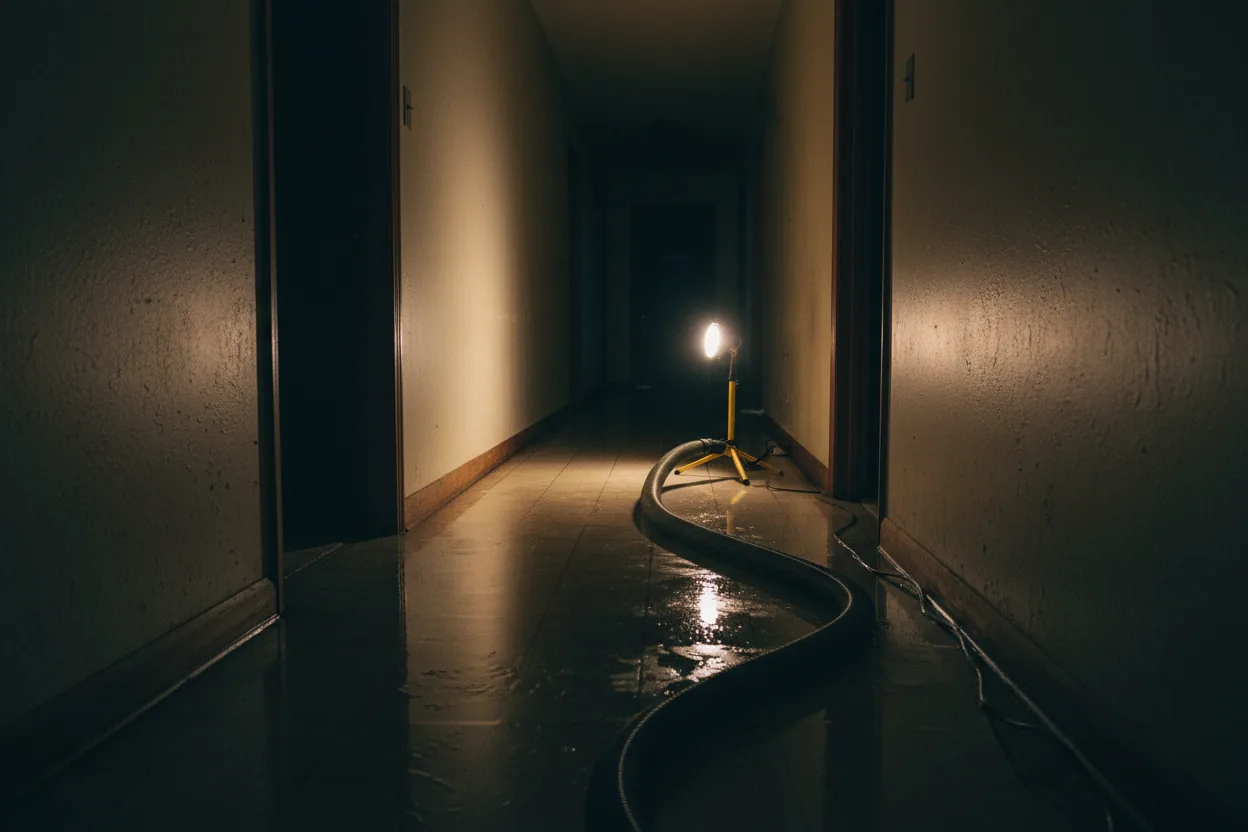
The first hour decides how much of your home comes out. We answer 24 hours a day, every day.
Structural drying
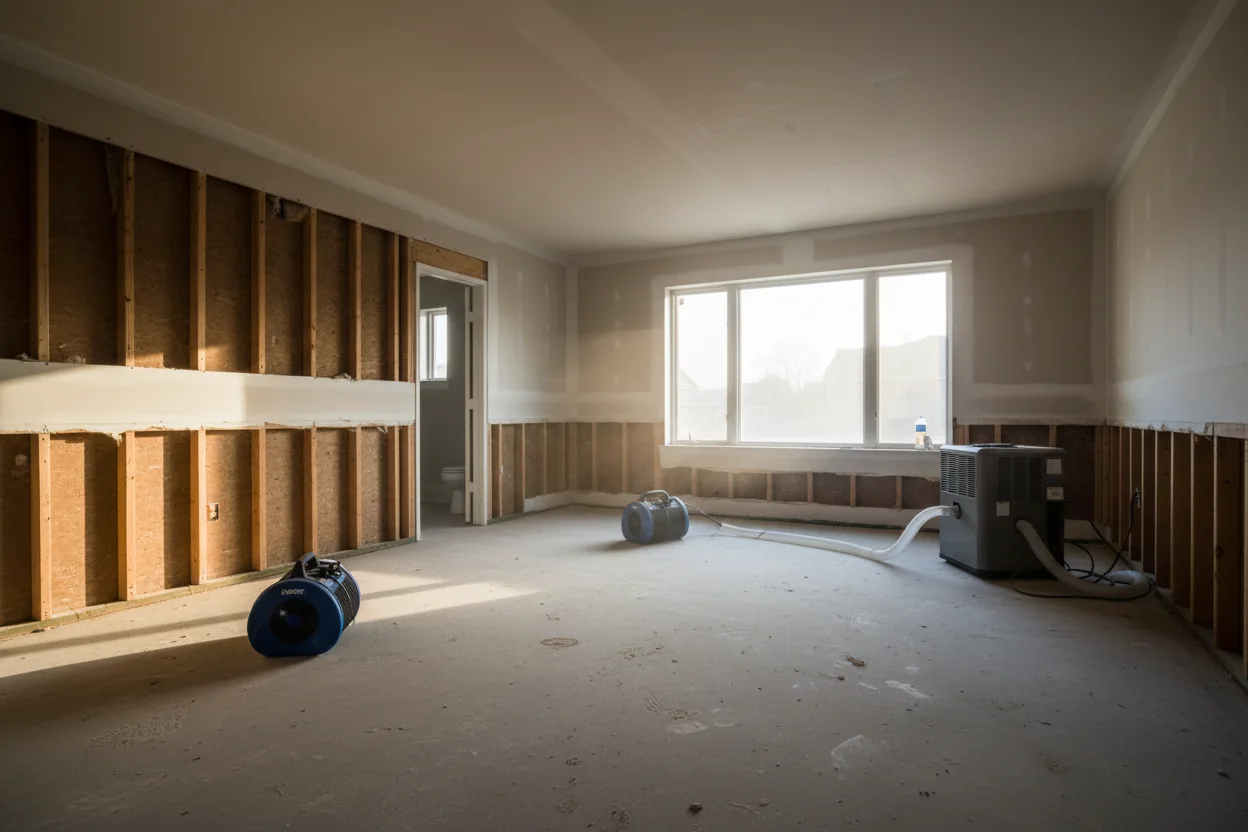
Gainesville Rapid Water Damage dries Gainesville buildings to a documented moisture reading using air movers, dehumidifiers and...
Carpet and flooring drying
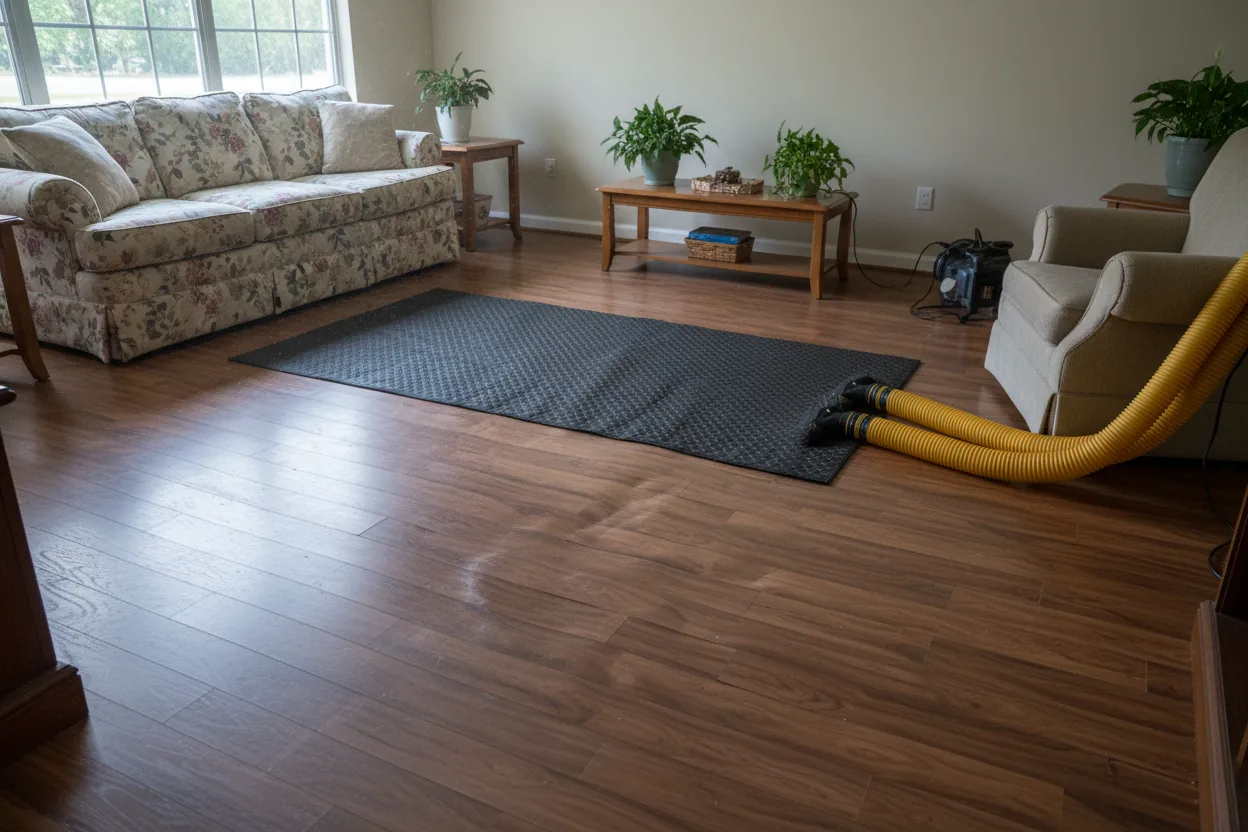
Gainesville Rapid Water Damage decides what flooring can be dried in place and what has to come out, and makes that call with...
Flood cleanup
Gainesville Rapid Water Damage cleans up flood water that has entered buildings across Gainesville and Alachua County. Flood...
Water still moving? Call now.
Every hour wet material stays wet, the repair gets bigger. Gainesville Rapid Water Damage answers 24/7 and books a free on-site assessment across Gainesville and Alachua County.
Call (352) 450-6122 Same-day response*