Water damage service
Gainesville Rapid Water Damage: appliance leak cleanup in Gainesville, FL
Gainesville Rapid Water Damage cleans up after failed appliances in Gainesville homes: water heaters, washing machines, dishwashers, refrigerator ice lines and their supply connectors. Appliance losses have a distinctive pattern, which is that they usually leak slowly for a long time before they fail suddenly, so the damage found on arrival is frequently older and larger than the event that prompted the call.
Call (352) 450-6122 Same-day response* across Gainesville and Alachua County
In Gainesville the water heater is the usual culprit, and its location matters. Local homes commonly place them in the garage, where a tank failure spreads across the slab and under the wall into the adjoining room before anyone notices.
Cleaning up after each appliance failure
Each appliance fails in its own way and puts water in a different place, which changes the search pattern on arrival.
Water heater tank failures
A failed tank releases its full capacity, commonly 40 to 50 gallons, then continues to feed from the supply until the valve is closed. Garage installations spread water under the adjoining wall.
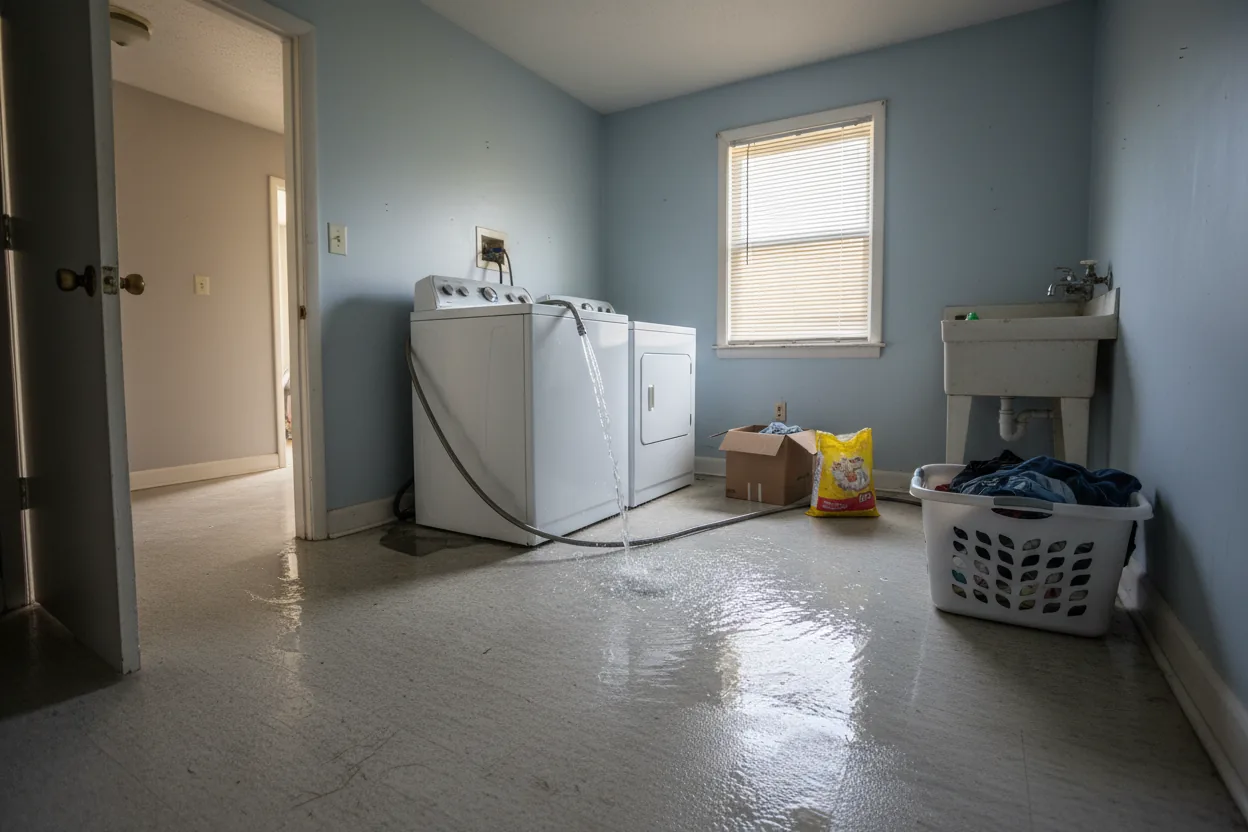
Washing machine supply hose failures
The classic sudden loss. A burst braided hose under pressure can deliver several hundred gallons an hour and is the reason these hoses have a replacement interval.
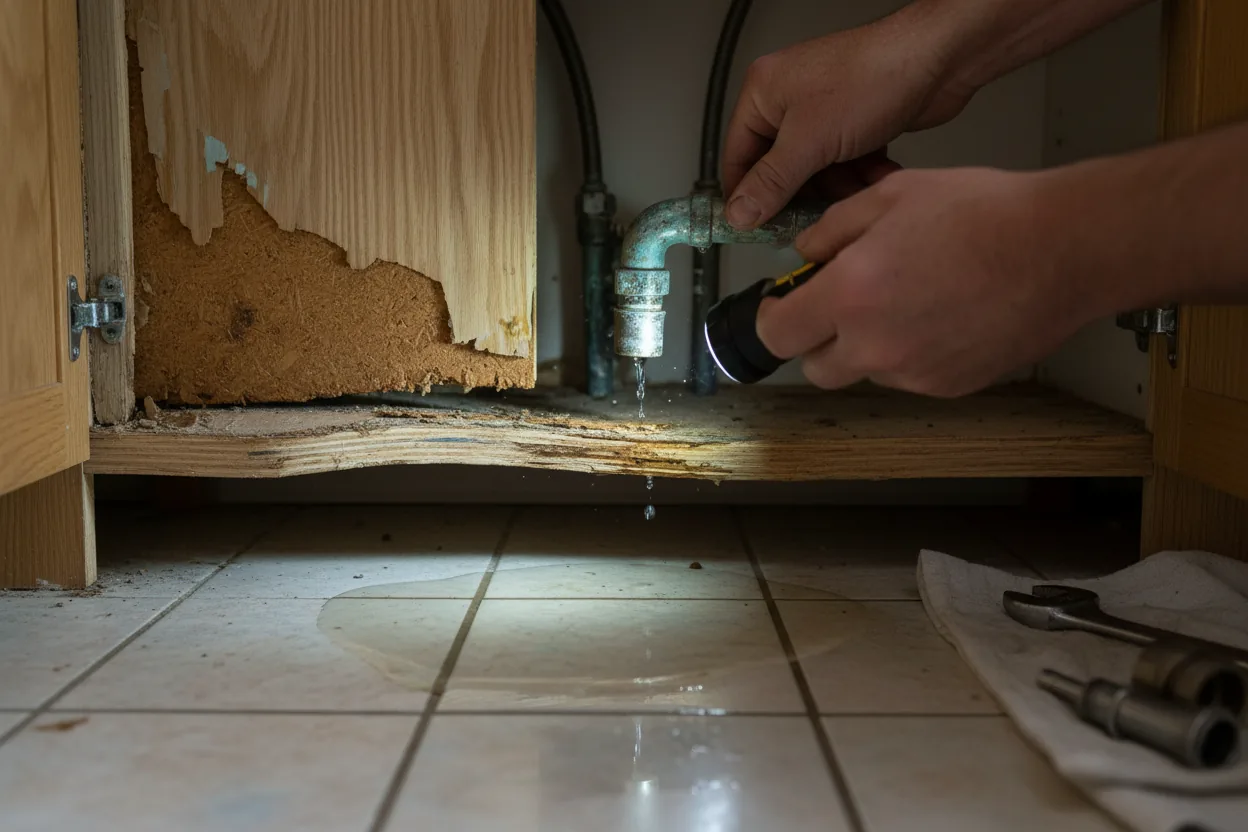
Dishwasher and under-sink leaks
Slow leaks into the cabinet base and under adjacent flooring, usually discovered as a soft spot or a smell rather than as visible water.
Refrigerator ice maker lines
Small diameter lines that fail behind the appliance, where nobody looks. These often run for weeks and produce mold before they produce a puddle.
Finding damage that started before the failure
The value of the assessment on an appliance loss is usually in what it finds beyond the obvious spill.
Checking under and behind the unit
Cabinet bases, subfloor and the wall behind the appliance are checked with meters, because slow leaks concentrate there long before they reach open floor.
Checking the adjoining room
Water under a garage or laundry wall commonly appears first as damp carpet edge in the next room, which is often the only symptom noticed.
Step by step
How an appliance leak is handled
- Isolate the appliance. Close the local supply valve, or the main if the local valve will not hold.
- Extract standing water. Surface water comes up before it wicks further into cabinet bases and adjacent rooms.
- Check for older hidden damage. Meters check behind and beneath the unit, where slow leaking usually predates the sudden failure.
- Dry cabinets and cavities. Cabinet kick spaces and wall cavities need directed airflow, since they will not dry passively.
- Repair or replace affected material. Swollen cabinet base material and damaged flooring are addressed once readings confirm dry.
Straight answers on price
What appliance leak cleanup costs
Usually one of the smaller water losses, unless the leak had been running quietly for weeks, in which case it behaves like a much larger job.
| What drives the price | Why it moves the number |
|---|---|
| Sudden failure or slow leak | A sudden burst caught quickly is a small job. A slow leak found late often involves cabinet replacement, subfloor repair and sometimes remediation. |
| Cabinet involvement | Particle board cabinet bases swell irreversibly once wet, so kitchen and vanity losses frequently mean cabinetry rather than just flooring. |
| Subfloor damage | Water trapped under flooring against subfloor takes longer to dry and sometimes requires removing the finish floor to reach it. |
| Room adjacency | A garage water heater that pushed water under the wall makes this a two-room job rather than a one-room job. |
Sudden appliance discharge is typically covered. Damage from a leak that has been happening gradually is commonly excluded as long-term seepage, and the replacement of the failed appliance itself is generally not covered at all.
Questions people ask
Questions people ask
My washing machine flooded the laundry room. Is that a big deal?
It depends where the water went, not how it looks. Laundry rooms usually share a wall with living space, and water travels under the wall plate. A meter check of the adjoining room takes a few minutes and frequently finds wet carpet edge nobody had noticed.
How often should I replace washing machine hoses?
Most manufacturers suggest replacing braided supply hoses roughly every five years, and they fail under constant pressure whether the machine is running or not. It is a low-cost part and one of the few genuinely effective ways to prevent a large water loss.
There is a smell under my sink but no visible water. Should I call?
Yes, and the assessment is free. A musty smell with no visible water is the classic slow-leak signature, and by the time it smells, the cabinet base and often the subfloor have been wet for a while. Meters settle it quickly.
Does insurance cover a failed water heater?
Generally the water damage is covered as sudden discharge, while the water heater itself is not, since replacing a failed appliance is treated as maintenance. Check the policy language, because slow-leak exclusions can also apply if the tank had been weeping.
Keep reading
Related
Burst pipe water damage
Gainesville Rapid Water Damage responds to burst supply line failures across Gainesville and Alachua County, usually within the...
Carpet and flooring drying
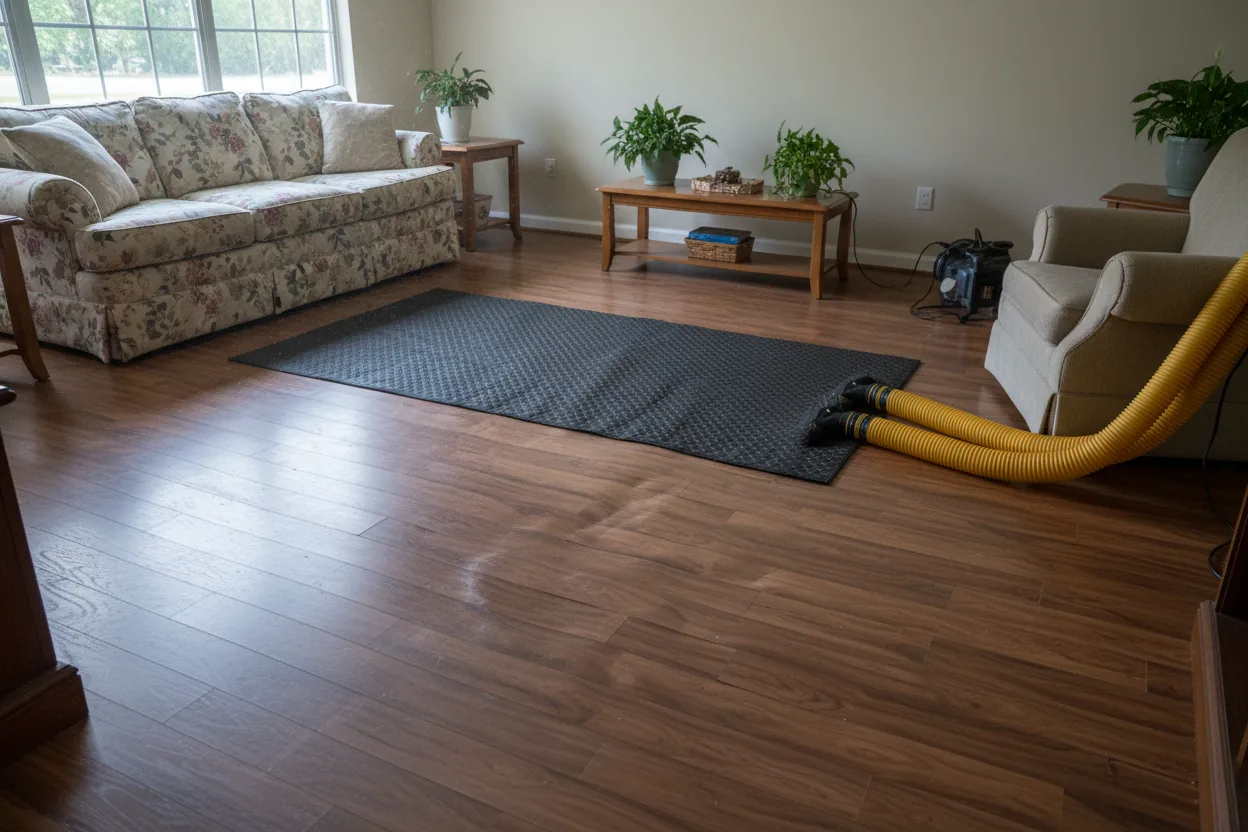
Gainesville Rapid Water Damage decides what flooring can be dried in place and what has to come out, and makes that call with...
Mold remediation
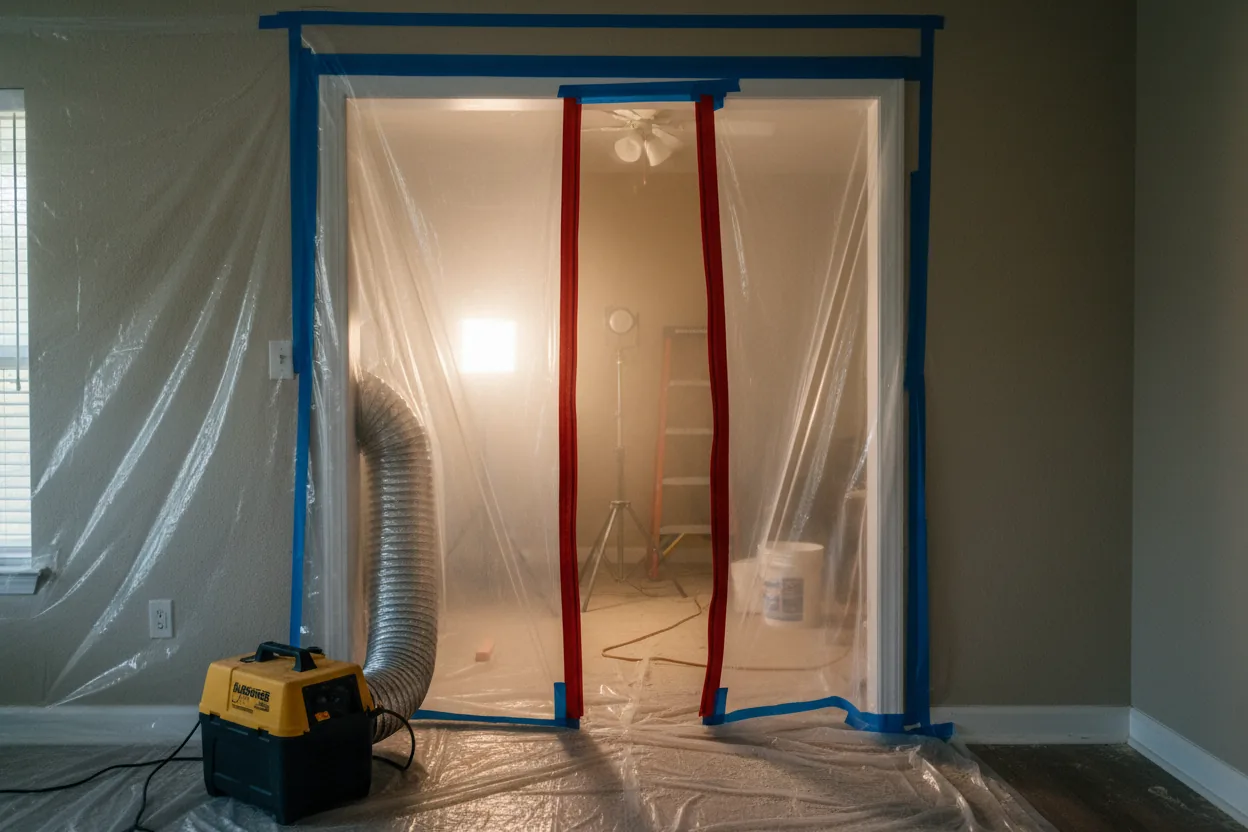
Gainesville Rapid Water Damage remediates mold growth that follows water damage in Gainesville and Alachua County buildings....
Water damage repair and reconstruction
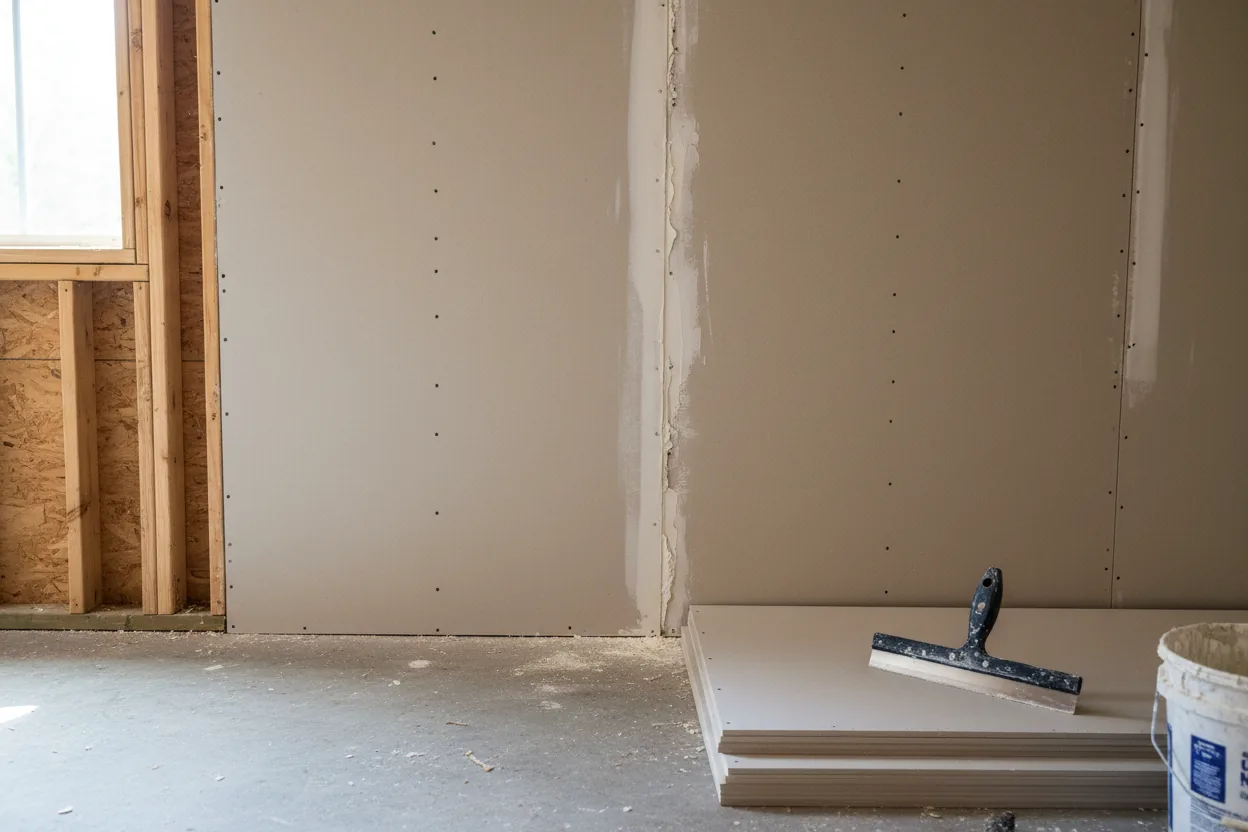
Gainesville Rapid Water Damage rebuilds what the water and the mitigation removed, from drywall and trim through paint and...
Water still moving? Call now.
Every hour wet material stays wet, the repair gets bigger. Gainesville Rapid Water Damage answers 24/7 and books a free on-site assessment across Gainesville and Alachua County.
Call (352) 450-6122 Same-day response*