Water damage service
Gainesville Rapid Water Damage: flood cleanup in Gainesville, FL
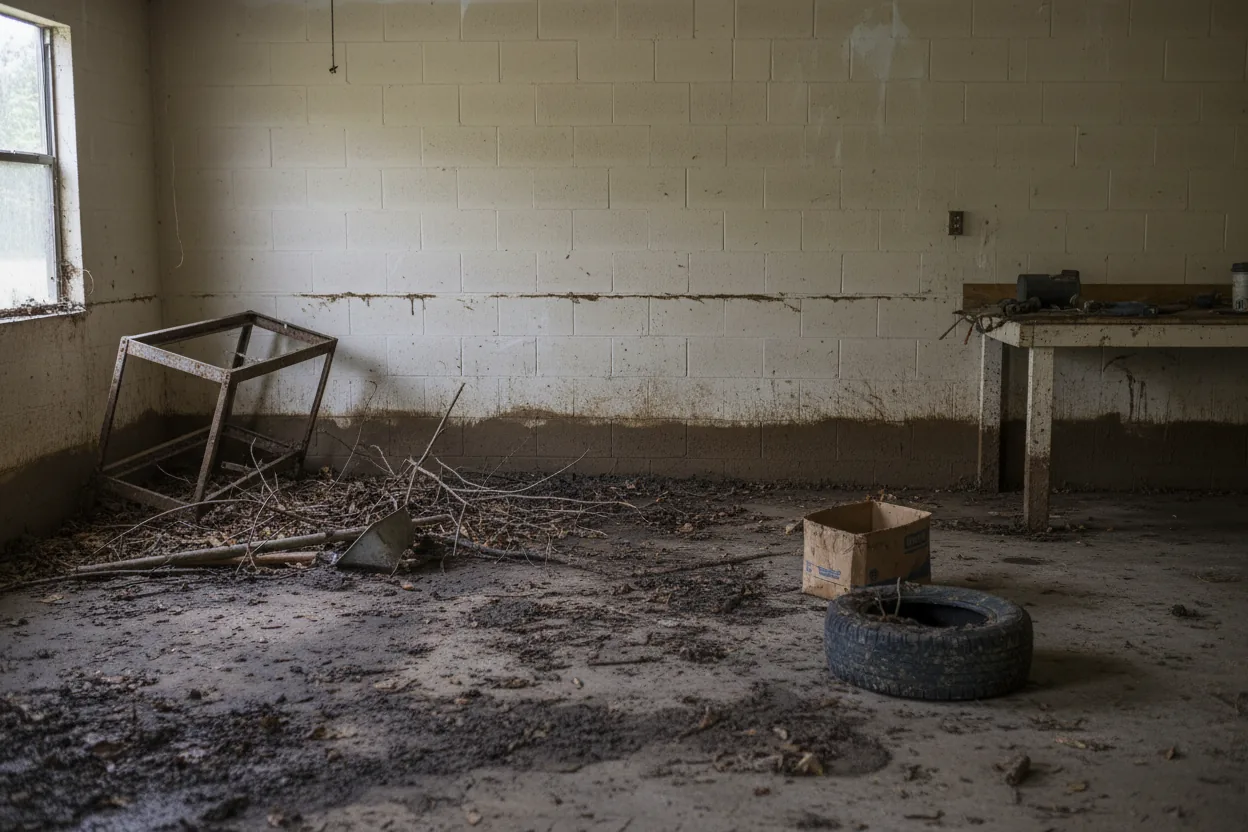
Gainesville Rapid Water Damage cleans up flood water that has entered buildings across Gainesville and Alachua County. Flood water is different from a plumbing loss in one decisive way: the moment surface water crosses your threshold it is category three, because it has traveled across ground, roads and storm drains and carries whatever it picked up. That classification, not the depth, is what determines how much material has to be removed.
Call (352) 450-6122 Same-day response* across Gainesville and Alachua County
Gainesville floods from its own drainage rather than from the coast. Hogtown Creek rises quickly during summer convective storms, and the low ground connected to it takes water from outside the building while the plumbing works perfectly.
Cleaning up surface flood water
Flood cleanup runs in a fixed order because the contamination dictates it: extract, remove what absorbed it, disinfect, then dry.
Removing flood water and sediment
Flood water leaves silt behind, so extraction is followed by physical removal of sediment before any drying equipment is placed.
Discarding contaminated porous material
Carpet, pad, and drywall below the water line are removed rather than dried. Porous material that absorbed category three water cannot be reliably decontaminated in place.
Disinfecting the remaining structure
Framing, slab and non-porous surfaces are cleaned and treated with antimicrobial before the space is closed back up.
Understanding why Gainesville floods inland
People new to north central Florida often assume inland means safe from flooding. Alachua County has its own mechanisms and they do not need a hurricane to operate.
Hogtown Creek and connected drainage
The creek system runs through the middle of the city and responds fast to heavy rainfall. Homes near it and near the connected storm drains take water from the yard side.
Karst ground and a rising water table
Limestone under Alachua County means groundwater can rise into crawlspaces and against slabs during sustained rain, without any surface flow reaching the property at all.
Tropical systems reaching inland
Inland is not immune. Tropical systems have historically produced significant freshwater flooding well away from the coast, including across north central Florida after Hurricane Irma in 2017.
Step by step
How flood cleanup runs
- Confirm the water has stopped entering. Cleanup cannot start while surface water is still flowing in.
- Extract standing water and sediment. Bulk water first, then the silt it left behind.
- Remove contaminated porous material. Carpet, pad and drywall below the line come out under containment.
- Clean and disinfect. Structural surfaces are washed and treated with antimicrobial.
- Dry and verify. Equipment runs until framing and slab read dry against the in-building standard.
Straight answers on price
What flood cleanup costs
Flood cleanup costs more per square foot than a clean water loss of the same size, because the category forces removal that a plumbing loss would not.
| What drives the price | Why it moves the number |
|---|---|
| Water line height | The height on the wall sets the flood cut and therefore how much drywall and insulation is removed. A few extra inches can double the material line. |
| Sediment load | Silt removal is manual labour that a clean water job does not involve at all. |
| Contents affected | Porous contents that sat in category three water are generally not salvageable, and disposal is a real line item. |
| Disinfection area | Every surface the water touched is cleaned and treated, not just the areas being rebuilt. |
This is the important one: standard homeowners policies almost always EXCLUDE rising surface flood water. That coverage comes from a separate flood policy, commonly through the National Flood Insurance Program, and it usually carries a 30-day waiting period. We document the loss either way, but check which policy applies before assuming you are covered.
Questions people ask
Questions people ask
Does my homeowners insurance cover flooding?
Usually not. Standard homeowners policies typically exclude rising surface water, which is what most people mean by flooding. That requires separate flood insurance, often through the National Flood Insurance Program, which generally has a 30-day waiting period before coverage begins.
Can any of my carpet be saved after a flood?
Generally no. Flood water is category three from the moment it crosses the threshold, and porous material that absorbed it is removed rather than cleaned. Carpet, pad and drywall below the water line come out. Hard surfaces and framing are cleaned and kept.
I am not in a flood zone. Why did my house flood?
Flood zone maps describe modelled risk, not a guarantee. Localised drainage failures, an overwhelmed storm drain and a fast-rising creek all put water into buildings outside mapped zones. A significant share of flood claims nationally come from outside high-risk zones.
How soon can cleanup start?
As soon as water has stopped entering the building and the structure is safe to work in. Starting while water is still flowing in wastes the extraction. We assess as soon as you call and stage equipment ready to begin the moment conditions allow.
Keep reading
Related
Storm damage cleanup
Gainesville Rapid Water Damage responds to storm-related water intrusion across Alachua County, from wind-driven rain through a...
Sewage and black water cleanup
Gainesville Rapid Water Damage cleans up sewage backups in Gainesville homes and businesses under full containment. A sewage...
Water extraction
Gainesville Rapid Water Damage removes standing and absorbed water from Gainesville homes and businesses with truck-mounted and...
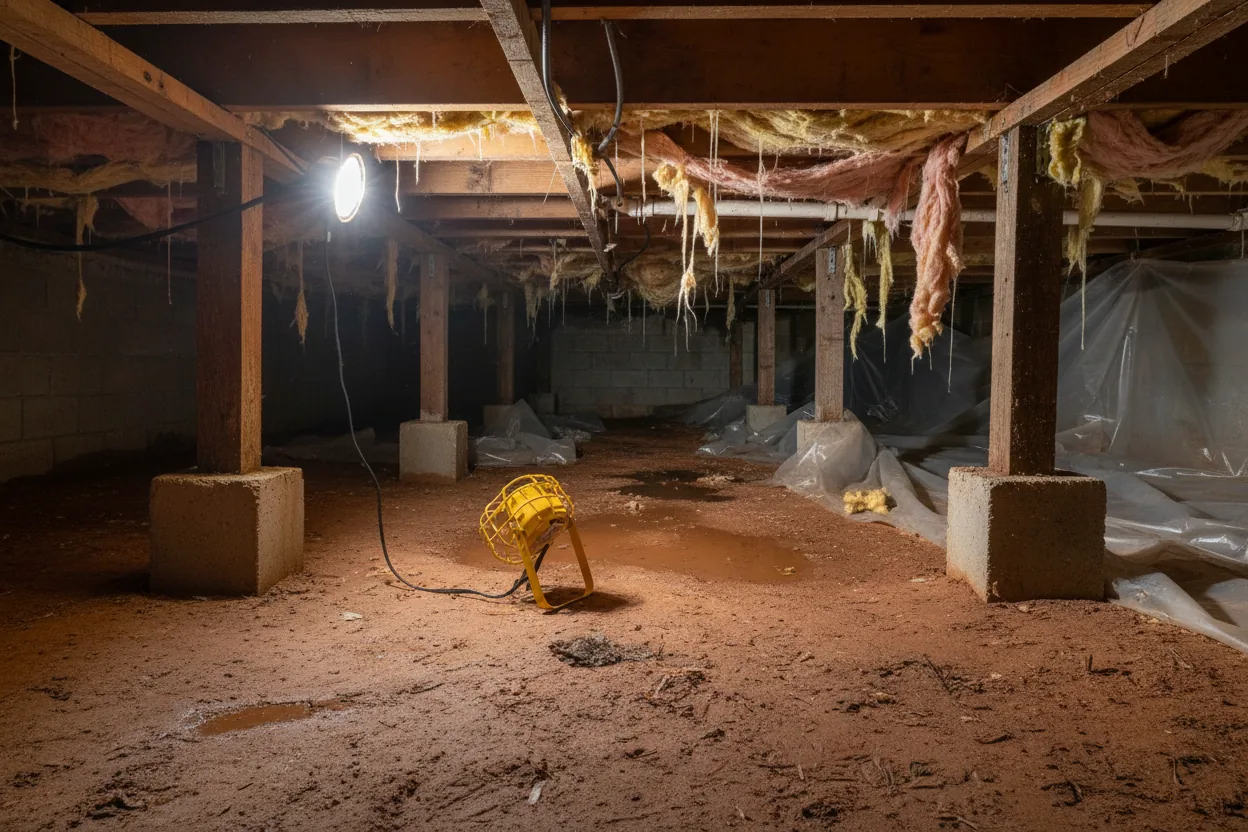
Crawlspace water damage
Gainesville Rapid Water Damage dries and treats crawlspaces under Gainesville homes, which in this city usually means the older...
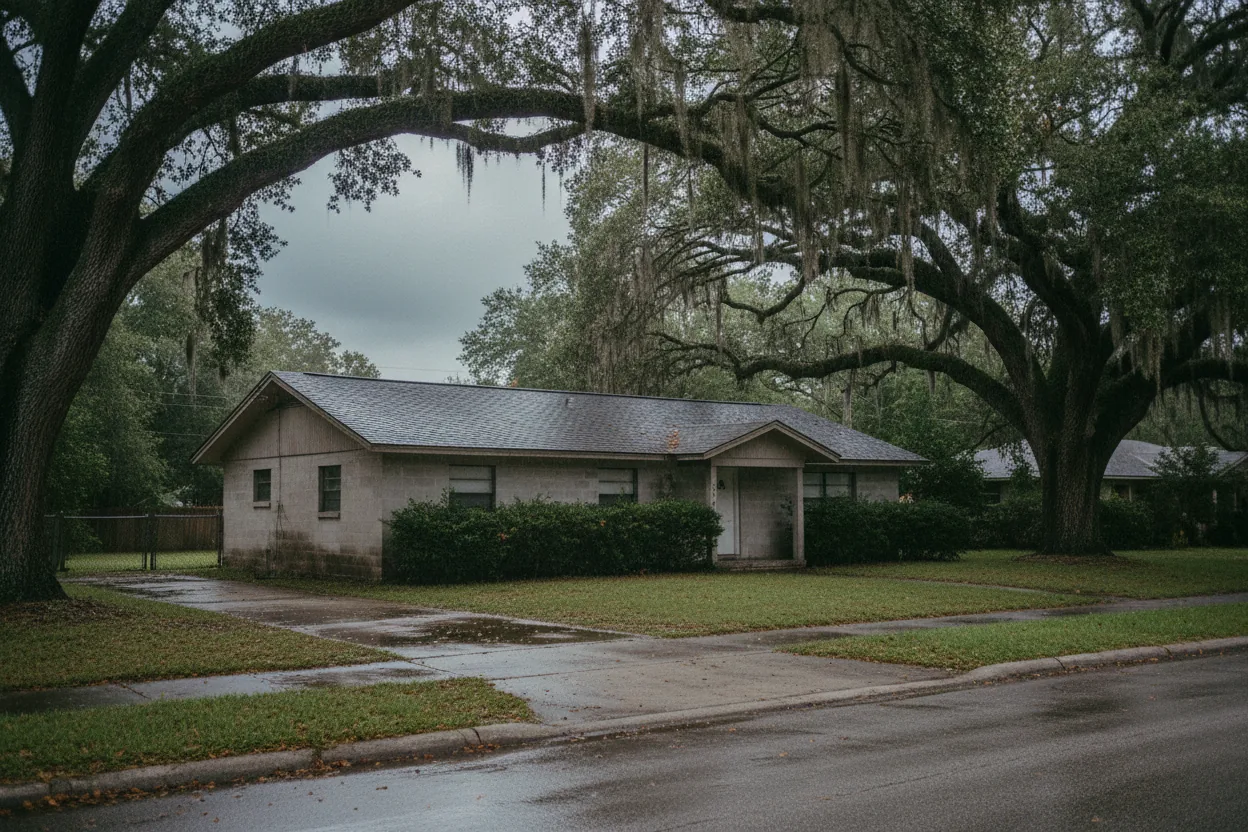
Water still moving? Call now.
Every hour wet material stays wet, the repair gets bigger. Gainesville Rapid Water Damage answers 24/7 and books a free on-site assessment across Gainesville and Alachua County.
Call (352) 450-6122 Same-day response*