Water damage service
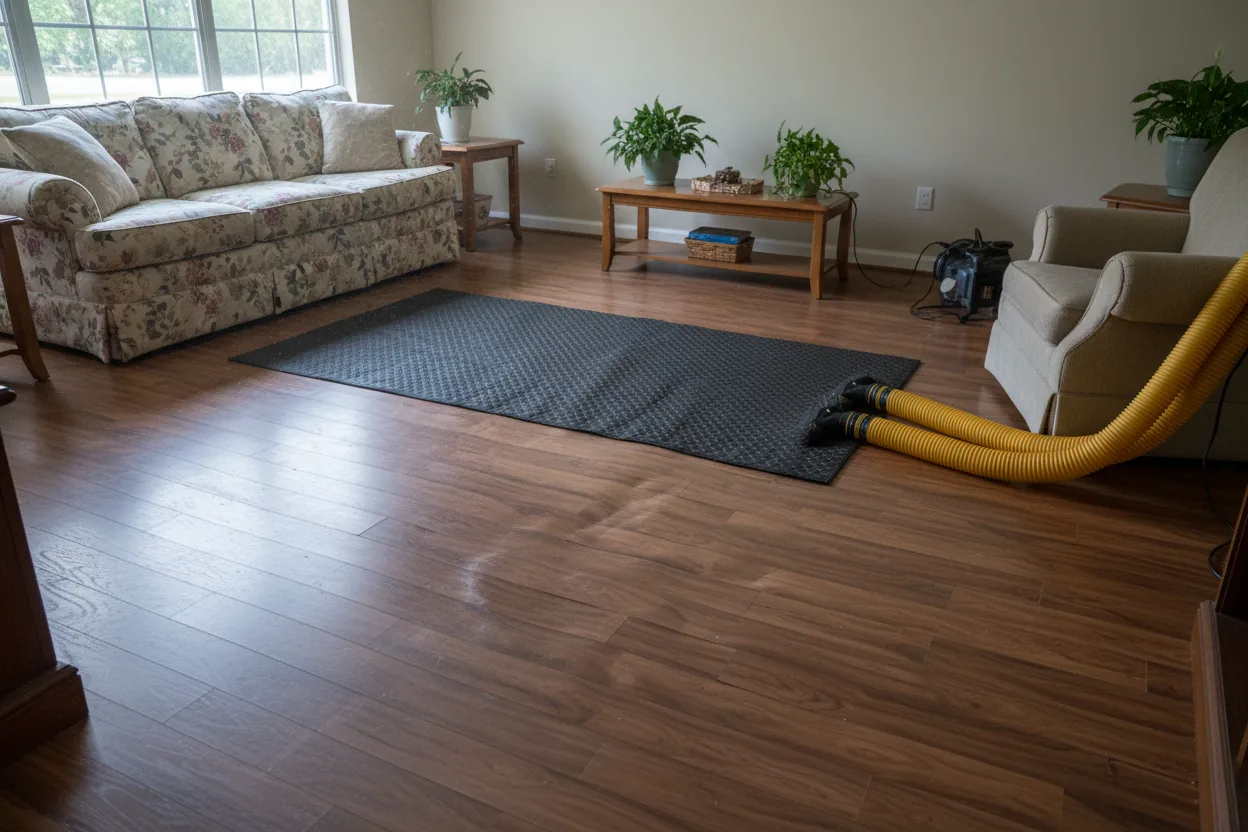
Gainesville Rapid Water Damage: carpet and flooring drying in Gainesville, FL
Gainesville Rapid Water Damage decides what flooring can be dried in place and what has to come out, and makes that call with meters rather than by eye. Flooring is usually the largest single replacement cost in a water loss, so the save-or-replace decision is where the most money is won or lost, and it is highly dependent on material and elapsed time.
Call (352) 450-6122 Same-day response* across Gainesville and Alachua County
Two Gainesville specifics shape this work. A large share of local housing is student rental with builder-grade carpet, and the university calendar means units regularly sit empty for weeks with nobody to notice a leak.
Drying each flooring type
Material determines the answer more than water volume does. Some floors are highly recoverable and some are effectively never worth drying.
Drying carpet and pad
Carpet itself is frequently salvageable if extraction is quick. The pad underneath usually is not, and it is cheaper to replace than to dry.
Drying solid hardwood with mat systems
Floor mat drying systems pull moisture up through solid hardwood and can save floors that look ruined, provided the work starts quickly and cupping has not become permanent.
Assessing engineered wood and laminate
These usually cannot be saved. The core swells at the seams once wet and the change is not reversible, so drying effort here mostly delays an inevitable replacement.
Drying tile and slab
Tile over a slab is the most survivable flooring in Florida. The tile is unaffected, and the question is only whether moisture is trapped beneath it or in the substrate.
Checking what is under the floor
The surface is rarely the problem. Water trapped between finish flooring and subfloor is what causes the failure that appears weeks later.
Moisture trapped under vinyl and LVP
Water under a non-permeable floor covering cannot evaporate upward. It stays against the subfloor until the covering is lifted, which is why a dry-looking floor can still be a problem.
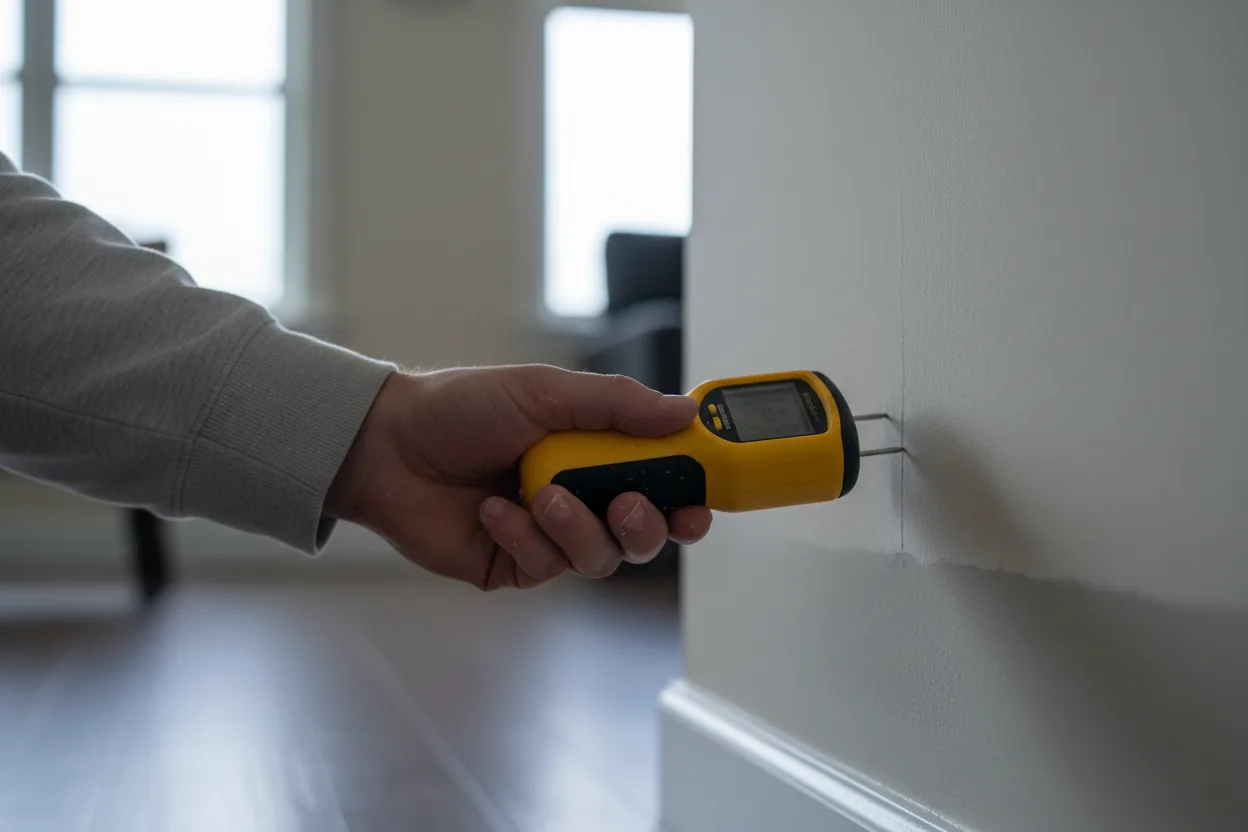
Subfloor and joist readings
Meters read the material under the finish surface. A dry-feeling floor over a wet subfloor is the most common false negative on a water loss.
Step by step
How the flooring decision is made
- Extract before deciding anything. Weighted extraction through carpet and pad removes most of the water and changes what is salvageable.
- Read the subfloor, not the surface. Meters go below the finish material, because that is where the decision actually lies.
- Lift where moisture is trapped. Non-permeable coverings are lifted or perforated so trapped water can be reached.
- Apply specialty drying where it will work. Mat systems for solid hardwood, directed airflow for carpet, cavity drying below where needed.
- Re-read before closing. Nothing is reinstalled until the subfloor reads dry against the in-building standard.
Straight answers on price
What flooring drying costs against replacement
Drying is almost always cheaper than replacement when it works. The judgement is whether it will work, and being honest about that is worth more than optimistic equipment days.
| What drives the price | Why it moves the number |
|---|---|
| Material type | The single biggest factor. Solid hardwood and tile are worth drying. Engineered wood and laminate usually are not, at any price. |
| Hours before extraction | Carpet extracted within hours is usually saved. The same carpet after two days generally is not. |
| Pad replacement | Pad is nearly always replaced on anything past a small clean-water loss, and it is inexpensive relative to the carpet above it. |
| Specialty equipment days | Mat drying systems cost more per day than standard air movers, and are worth it when the floor beneath is genuinely recoverable. |
| Trapped moisture | Water under a non-permeable covering may require lifting sections, which adds labour but prevents a failure later. |
Adjusters frequently push toward drying over replacement because it is cheaper, which is reasonable where drying works. Documented subfloor readings are what settles the argument when a floor genuinely cannot be saved, so the daily log matters here more than on most losses.
Questions people ask
Questions people ask
Can my carpet be saved?
Often yes, if extraction happened quickly and the water was clean. The pad underneath usually is not saved, but replacing pad is far cheaper than replacing carpet. Category three water changes the answer to no regardless of timing.
My laminate floor is buckling at the seams. Can you dry it?
Realistically no. Laminate and engineered wood swell in the core once water reaches the seams, and that swelling does not reverse when the material dries. We will tell you that rather than bill drying days for a floor that will still need replacing.
The floor feels dry. Why do you want to lift it?
Because vinyl and luxury vinyl plank are not permeable, so water underneath cannot evaporate up through them. The surface feels normal while the subfloor stays wet. Lifting a section is the only way to read what is actually happening beneath.
How long does drying a floor take?
Typically three to five days for carpet and subfloor, and often longer for solid hardwood with a mat system, since the moisture has to travel up through dense material. Readings decide, and Gainesville humidity tends to extend it rather than shorten it.
Keep reading
Related
Water extraction
Gainesville Rapid Water Damage removes standing and absorbed water from Gainesville homes and businesses with truck-mounted and...
Structural drying
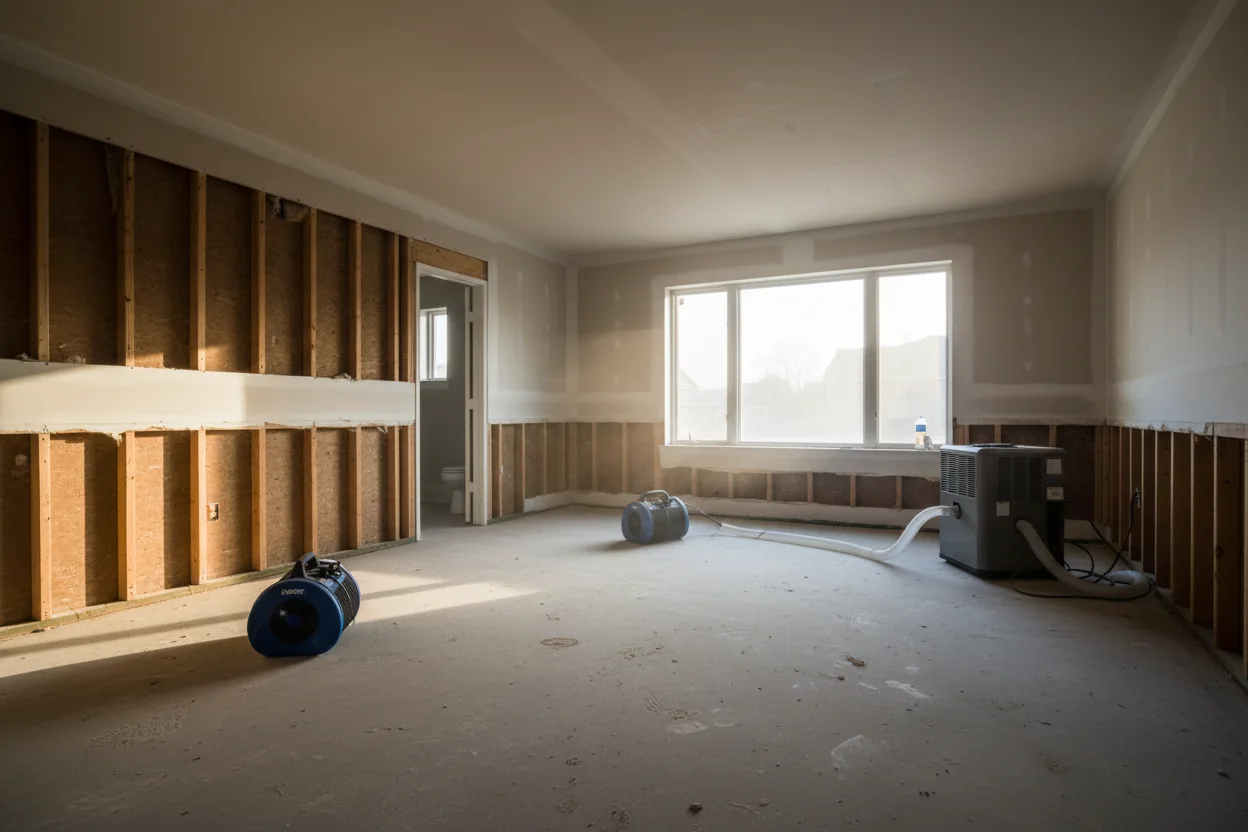
Gainesville Rapid Water Damage dries Gainesville buildings to a documented moisture reading using air movers, dehumidifiers and...
Wet drywall removal
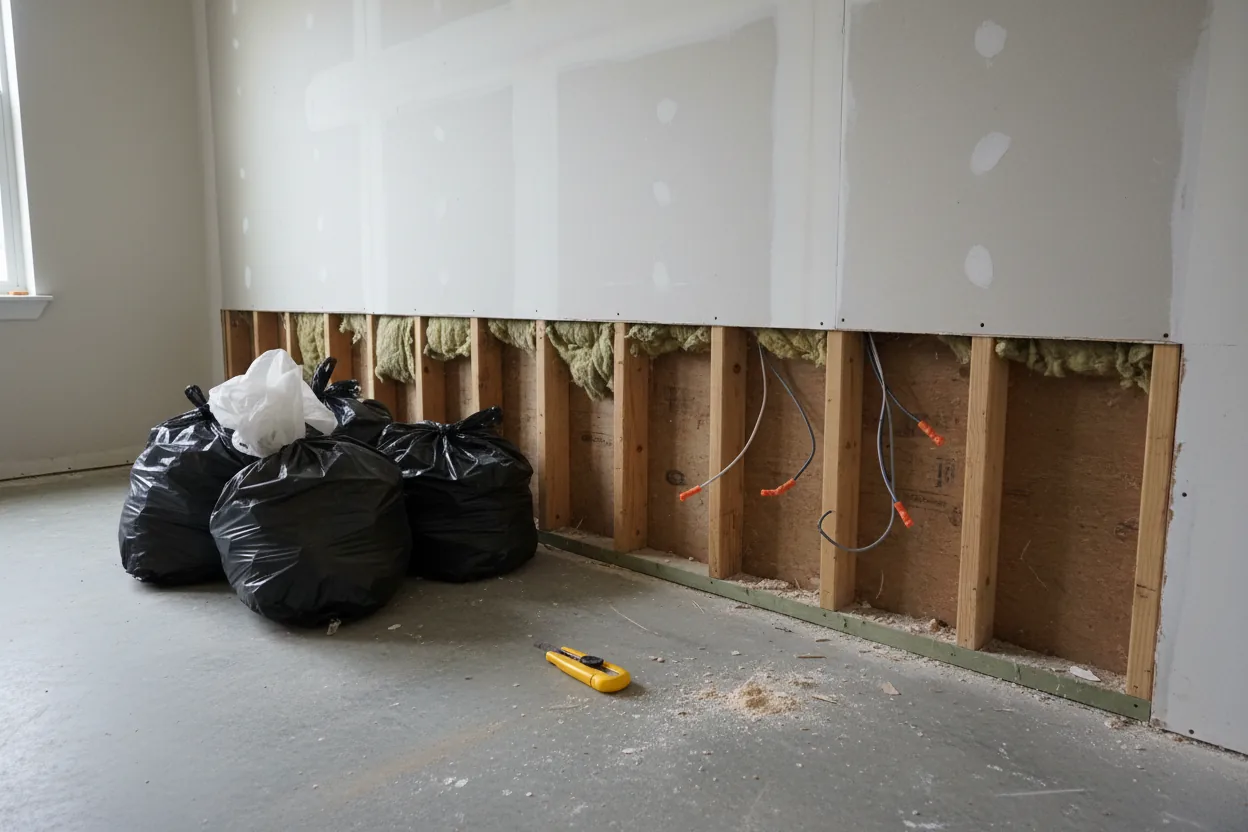
Gainesville Rapid Water Damage removes saturated drywall from Gainesville buildings with controlled cuts back to genuinely dry...
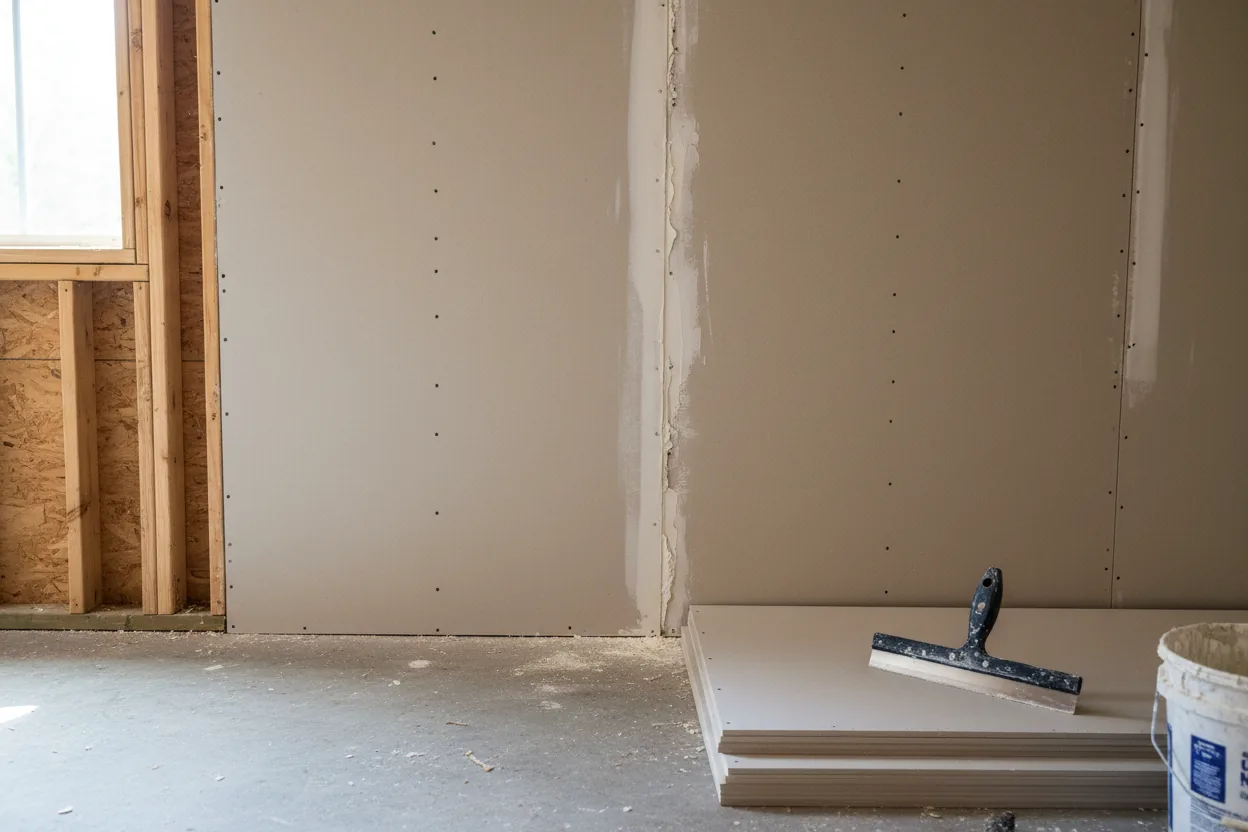
Water damage repair and reconstruction
Gainesville Rapid Water Damage rebuilds what the water and the mitigation removed, from drywall and trim through paint and...
Water still moving? Call now.
Every hour wet material stays wet, the repair gets bigger. Gainesville Rapid Water Damage answers 24/7 and books a free on-site assessment across Gainesville and Alachua County.
Call (352) 450-6122 Same-day response*