Water damage service
Gainesville Rapid Water Damage: structural drying in Gainesville, FL
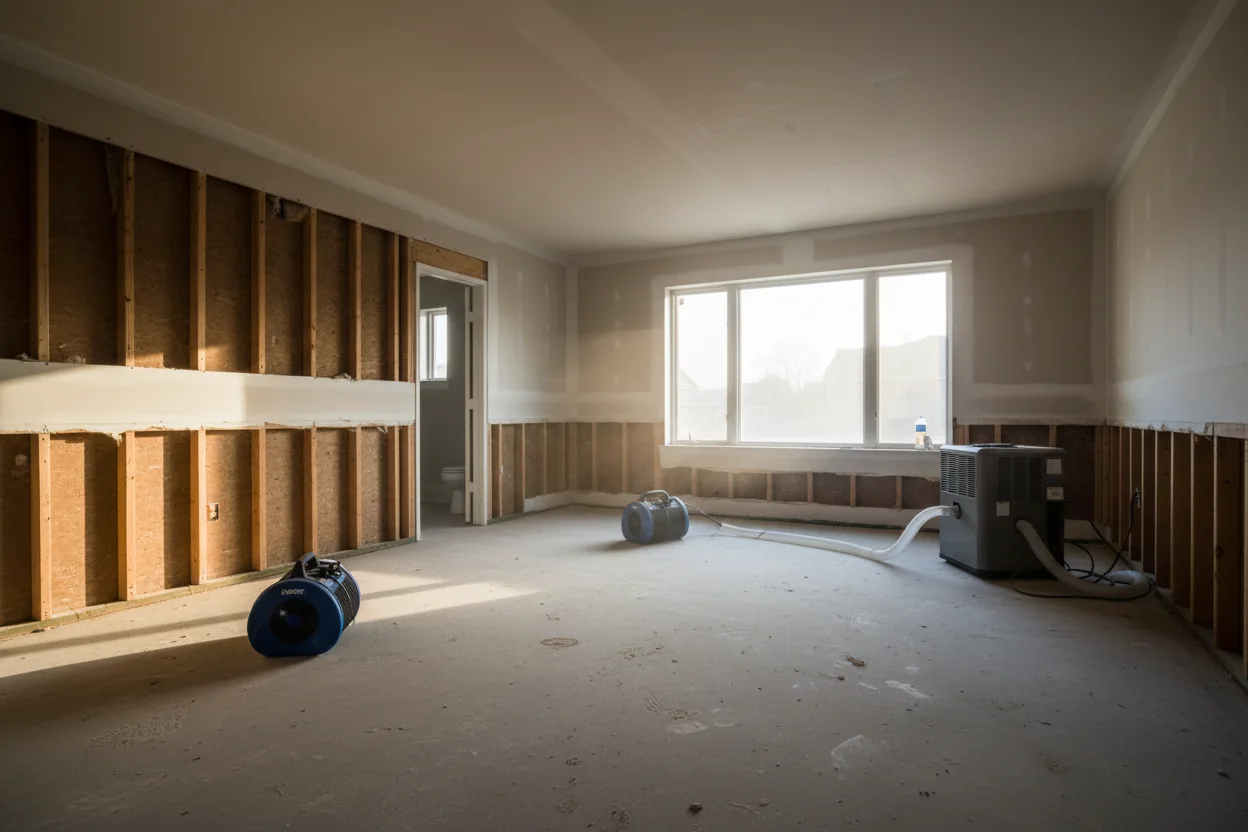
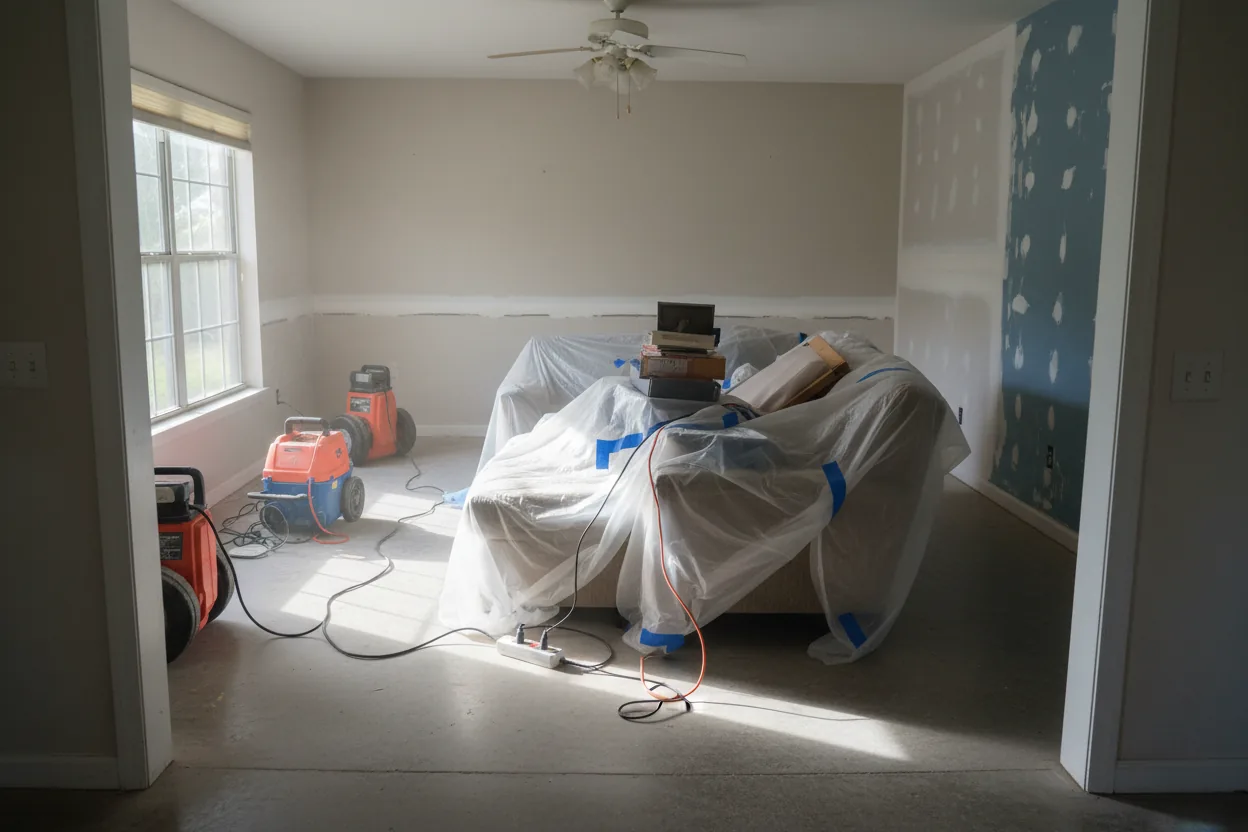
Gainesville Rapid Water Damage dries Gainesville buildings to a documented moisture reading using air movers, dehumidifiers and daily monitoring. Structural drying is the science half of restoration: evaporation rate depends on airflow, temperature and the vapour pressure difference between wet material and the surrounding air, which is exactly why Gainesville is a harder drying environment than the national averages assume.
Call (352) 450-6122 Same-day response* across Gainesville and Alachua County
Local humidity is the reason. When outdoor air regularly sits above 80 percent relative humidity through the summer, opening windows makes the problem worse rather than better, and the dehumidifier is doing all the work.
Drying the structure to a measured standard
Drying finishes when material reads dry, established by comparing affected material against unaffected material of the same type in the same building. A generic target number is meaningless because the dry standard for framing in a humid Alachua County house is not the dry standard for framing in Denver.
Dehumidification in a humid climate
Low-grain refrigerant dehumidifiers pull moisture from the air so evaporation can continue. In Gainesville summers this equipment is the constraint on the whole job, not the air movers.
Directing airflow across wet surfaces
Air movers are placed at an angle to the surface to break the boundary layer of saturated air sitting against the material. Placement matters more than quantity.
Drying inside wall cavities and under flooring
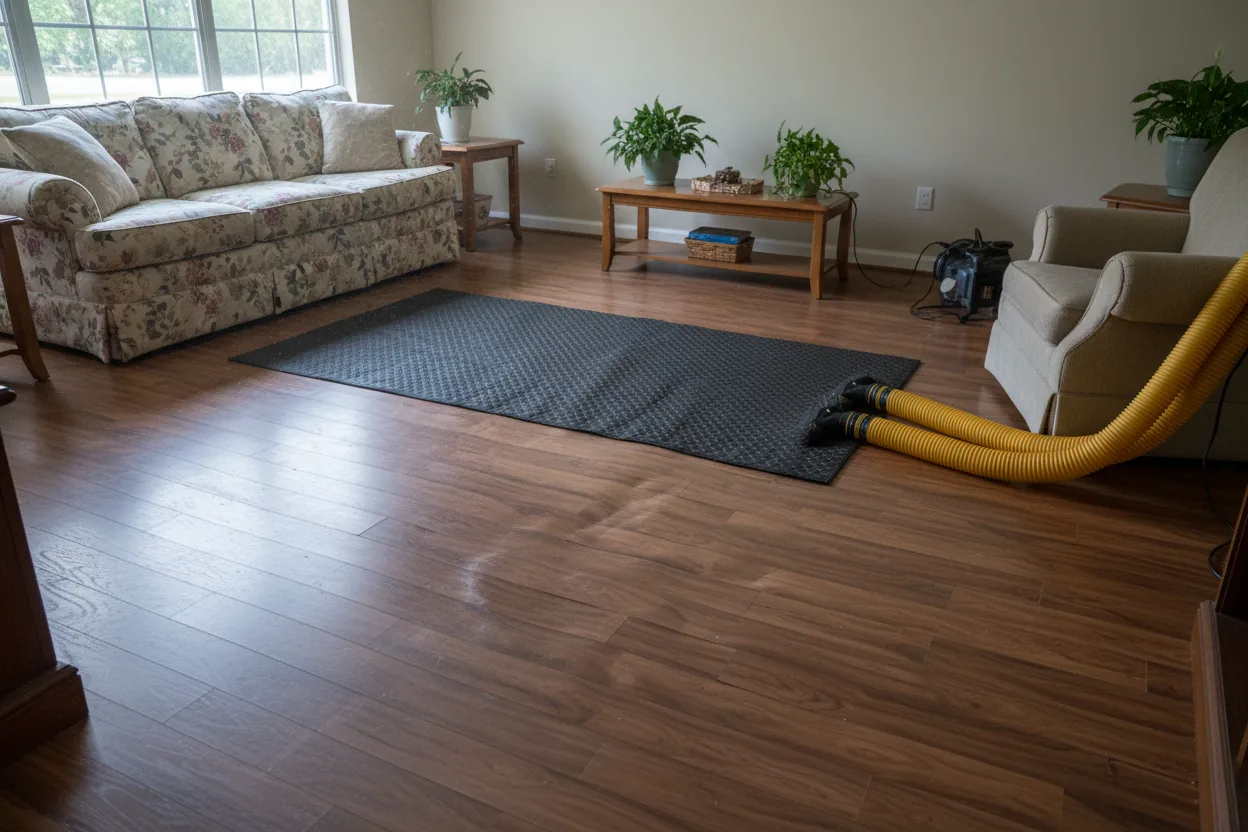
Injection drying and floor mat systems push air into spaces that cannot be opened, which saves hardwood and cavity insulation that would otherwise be removed.
Controlling temperature during drying
Warmer material releases moisture faster, so the affected area is kept warm rather than cooled, which is counterintuitive to most homeowners in a Florida summer.
Monitoring and documenting the dry-out
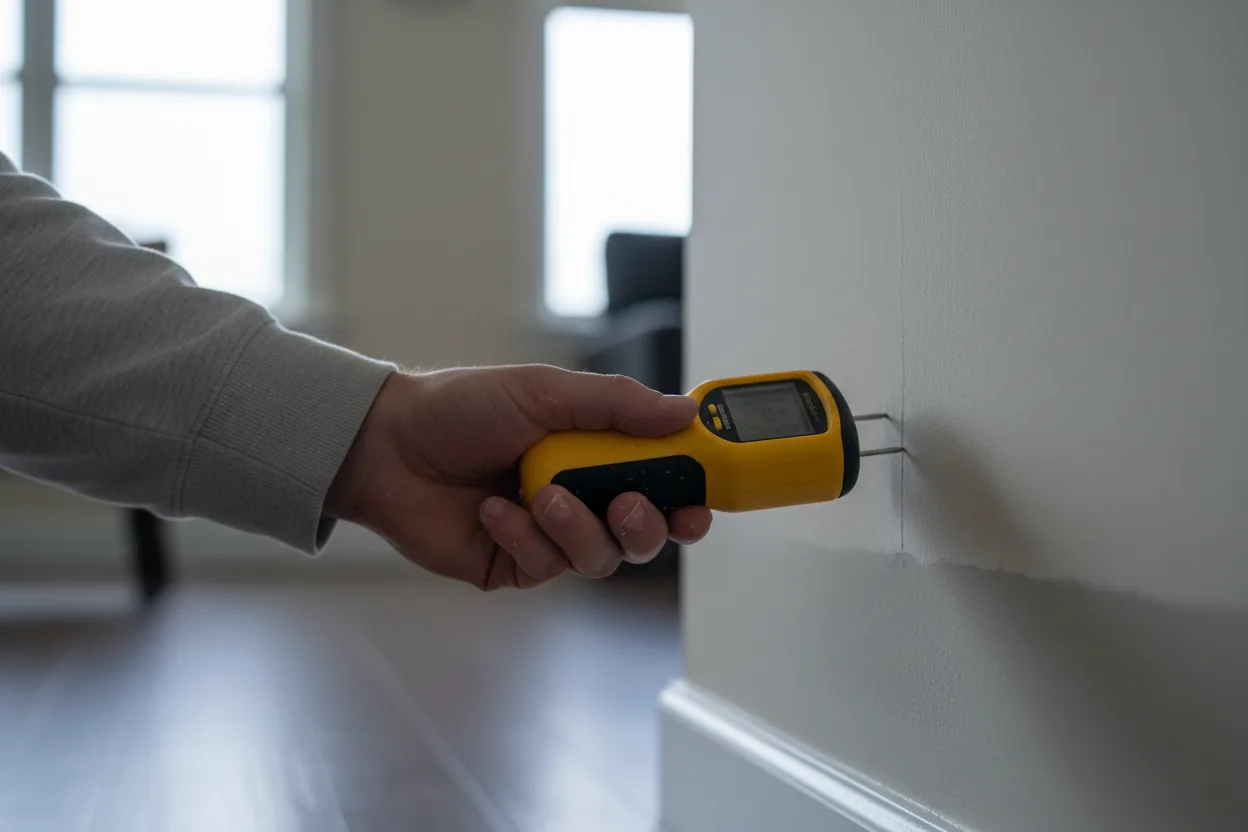
Readings are taken daily at marked points and recorded. This is what turns drying from a claim into evidence, and it is the record that settles any later question about whether the building was dry before the wall closed.
Establishing the dry standard
An unaffected area of the same material in the same building sets the target. Everything is measured against that rather than a published figure.
Knowing when to stop
Equipment comes out when readings hold at the dry standard, not when a preset number of days has elapsed. Sometimes that is faster than expected and sometimes it is a day longer.
Step by step
How the drying phase runs
- Establish the dry standard. Unaffected material of the same type is measured to set the target reading.
- Place equipment by calculation. Air mover and dehumidifier counts are set by affected area and material class, not by guess.
- Log day-one readings. Marked measurement points are recorded as the baseline the job is judged against.
- Monitor daily and adjust. Equipment is moved as the wet footprint shrinks, concentrating capacity on what is still holding moisture.
- Verify and remove equipment. When readings hold at the dry standard, equipment comes out and you receive the log.
Straight answers on price
What structural drying costs
Drying is billed on equipment units per day plus monitoring visits. The variable that moves the total most is the number of days, and in Gainesville that is driven substantially by ambient humidity.
| What drives the price | Why it moves the number |
|---|---|
| Equipment count | Set by affected square footage and material class. More wet area needs more air movers and more dehumidifier capacity, not just longer run time. |
| Number of drying days | Typically three to five for a residential loss. Local humidity commonly adds a day compared with national average figures for the same water volume. |
| Cavity and specialty drying | Injection drying for wall cavities or mat systems for hardwood costs more per day but frequently saves the material, which is far cheaper than replacing it. |
| Monitoring visits | Daily readings mean daily site visits. This is what makes the dry-out provable and is not a step worth cutting. |
| Power availability | Older Gainesville homes sometimes cannot run the required equipment on existing circuits, and temporary power adds cost. |
Equipment days are a frequent point of dispute on claims, because adjusters compare against drying-time tables built on national averages. Daily logged readings are the answer: they demonstrate why the equipment was still required on day five.
Questions people ask
Questions people ask
Can I just open the windows and run fans?
In Gainesville, usually not. When outdoor humidity is above roughly 60 percent, bringing that air inside adds moisture rather than removing it. Household fans move air but do nothing to lower vapour pressure, which is what actually dries material.
How do you know when it is dry?
By comparing readings from affected material against unaffected material of the same type in the same building. That in-building comparison is the dry standard. Equipment comes out when readings hold at it, and you get the log.
Why is the equipment so loud and does it have to run overnight?
Yes, continuously. Evaporation stops when airflow stops, and a nightly shutdown can add days to the job. The units are noisy because moving large volumes of air is the mechanism, and the drying phase is deliberately short.
My floor felt dry after two days. Why did equipment stay?
Surface dryness and material dryness are different. Subfloor, framing and the bottom of drywall routinely still read wet when the walking surface feels normal. Closing the job at that point is the most common cause of mold behind a repaired wall.
Keep reading
Related
Water extraction
Gainesville Rapid Water Damage removes standing and absorbed water from Gainesville homes and businesses with truck-mounted and...
Carpet and flooring drying
Gainesville Rapid Water Damage decides what flooring can be dried in place and what has to come out, and makes that call with...
Mold remediation
Gainesville Rapid Water Damage remediates mold growth that follows water damage in Gainesville and Alachua County buildings....
Water damage restoration
Gainesville Rapid Water Damage runs water damage restoration as one continuous job, from the first extraction through the...
Water still moving? Call now.
Every hour wet material stays wet, the repair gets bigger. Gainesville Rapid Water Damage answers 24/7 and books a free on-site assessment across Gainesville and Alachua County.
Call (352) 450-6122 Same-day response*